

Last Updated: October 5, 2026
Steel Market Update: What Moved This Quarter
The steel market update heading into Q4 shows a market that keeps tightening. According to Steel Market Update's weekly price assessment, sheet and plate prices increased again during the week of September 29 amid limited spot availability and lean inventories.
The short version: hot rolled coil (HRC) is up for a third straight week, cold rolled tags are following, and mill lead times are stretched. Availability, not demand, is the story.
The Numbers Behind the Tight Q4 Market
The clearest benchmark this quarter comes from Nucor, which raised its Consumer Spot Price for HRC by $10 per short ton, from $1,210 to $1,220 per ton on September 28. West Coast material from California Steel Industries now sits at $1,280 per ton, according to Steel Market Update's pricing coverage.
Several forces are holding prices up at once: scarce domestic spot tons, long mill lead times, lean steel inventories, stable-to-improving demand, and continued mill maintenance outages. Most buyers surveyed by SMU expect prices to keep climbing in the near term, sentiment that matters because it drives buying behavior.
Hot Rolled Coil Prices: Third Straight Weekly Increase
Hot rolled coil prices rose again this week, extending a streak that began in early September. HRC is the starting material for square steel tubing, rectangle steel tubing, welded tubing, hot rolled sheet, some welded pipe, and formed steel components.
What HRC Prices Mean for Tubing and Sheet Buyers
For tubing and sheet buyers, the practical effect is straightforward: quotes have a shorter shelf life. Ask suppliers how long a quote is valid, and expect to re-confirm pricing on anything you do not order immediately.
Cold Rolled Steel Prices: Tighter Availability, Higher Tags
Cold rolled steel prices ticked higher in the same September 29 assessment, as tight flat-rolled availability carried into the fourth quarter. Cold rolled begins as hot rolled steel, then receives additional processing that improves surface finish, dimensional accuracy, thickness consistency, and tolerances, which is why tight hot rolled supply eventually squeezes cold rolled too. Typical applications include precision sheet-metal parts, cabinets, enclosures, and any part where a clean finish and consistent dimensions matter.
Hot Rolled vs. Cold Rolled Steel: Which One Your Project Needs
The choice between hot rolled and cold rolled steel comes down to three trade-offs: cost, finish, and tolerance. Hot rolled is the economical option for welding, fabrication, and general shop work where a mill-scale surface is acceptable. Cold rolled costs more because it delivers a smoother finish and tighter tolerances.
Factor |
Hot Rolled |
Cold Rolled |
|---|---|---|
Surface finish |
Mill scale, rougher |
Smooth, clean |
Dimensional tolerance |
Standard |
Tight |
Relative cost |
Lower |
Higher |
Best for |
Welding, fabrication, structural work |
Machining, precision parts, clean finishes |
Typical products |
Tubing, angle iron, flat bar |
Round bar, precision components |
Cost, Finish, and Tolerance Trade-Offs
A common mistake is ordering cold rolled for a job that never needed it. If the part gets welded into a frame and painted, paying extra for a smooth finish is money wasted.
For example, our 1" diameter 1018 cold rolled steel round bar is built for exactly that machining work, with a smooth cold-finished surface and tight dimensional tolerances held to ±1/8" on length. If your project is a weldment instead, the 1" diameter A36 hot rolled steel round bar does the same job for less, with excellent weldability and a mill-scale finish.

Steel Mill Lead Times: Why Availability Is the Real Story
Steel mill lead times are long, and that is the real driver behind this quarter's pricing. Domestic spot tons are scarce, inventories are lean, and maintenance outages are still pulling capacity offline.
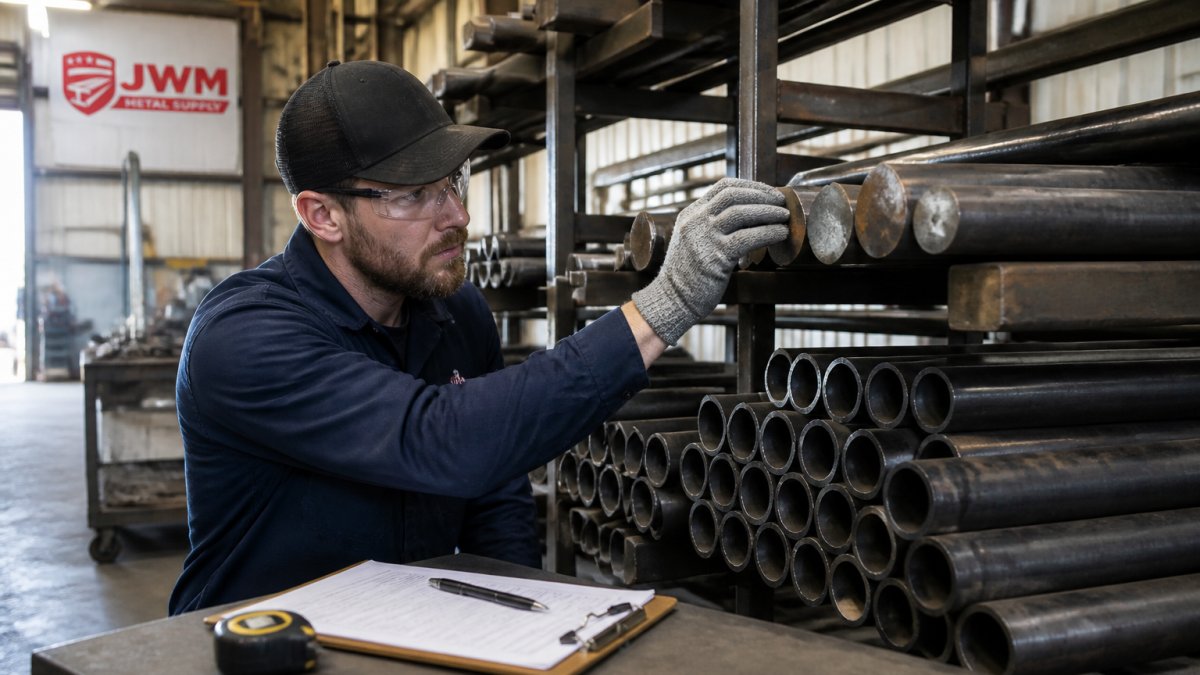
How a Mill Lead Time Actually Works
A quoted mill lead time is not a delivery date. It is an estimate of when your order enters the rolling schedule, and it moves for reasons unrelated to your order:
- Order book position. Mills roll to a sequence. A large contract that lands ahead of your release pushes your tonnage back, even if nothing about your order changed.
- Maintenance outages. When a mill takes a caster or rolling line down for scheduled maintenance, the tons that would have run during that window get redistributed into the weeks on either side.
- Grade and size changes. Switching a mill to a different chemistry or cross-section costs setup time. Mills batch similar orders together, so an unusual size can wait for enough companion tonnage to justify a run.
A lead time quoted at the start of a quarter often stretches by several weeks before the quarter ends, without anyone at the mill issuing a revised promise date. That is how a rolling schedule absorbs disruption.
Why Availability Beats Price Right Now
In a balanced market, the lowest quote wins. In a tight market, the quote that ships wins. A buyer who locks a favorable price but waits six weeks for delivery has not saved money; they have financed a schedule slip, and idle labor usually costs more than the difference between two quotes. This is where a supplier's own inventory matters more than the headline price: distributors who hold stock can commit to a ship date, while those back-to-back with the mill pass along the mill's uncertainty.
A Simple Availability Check Before You Quote a Job
Before you promise a customer a date, run this sequence:
- Ask whether the material is in stock or mill-direct. Two different answers, two different risk profiles.
- Ask for a ship date, not a lead time. A ship date is a commitment; a lead time is an estimate.
- Ask how long the quote is valid. In a rising market, validity windows shorten.
- Ask what happens if the mill slips. A supplier holding stock can absorb a mill delay; one without stock cannot.
- Confirm the cut length and quantity before ordering. Material that arrives in the wrong length is scrap plus a second lead time.
The Regional Dimension
Lead times are not national. Mills serving different regions run different order books, and freight distance adds transit time on top of production time. A buyer in one region may see materially different availability than a buyer elsewhere for the same product on the same day. When you compare quotes, compare the ship date, not just the number.
1" Diameter 1018 Cold Rolled Steel Round Bar – Cut to Length →
What This Steel Market Update Means for Small Buyers
Small buyers feel tight markets first, and that is the part most updates skip. A hobbyist building a trailer frame or a small shop restocking round bar does not have the volume to command mill attention, and minimum order requirements at many suppliers make small orders impractical. But the disadvantage is not size, it is timing. Here is a framework for buying well when you cannot buy big.
Lock In or Buy Spot? A Decision Framework
The most useful question in a rising market is whether to commit to a price now or wait. There is no universal answer, but there is a repeatable way to decide:
Lock in when:
- Your project schedule is fixed and a delay costs you more than a price increase would.
- The material is a standard size and grade that a supplier stocks, so availability is the only real risk.
- You need the material within the next few weeks and the market is still moving up.
Buy spot when:
- Your project date is flexible and you can absorb a short wait.
- You are still in design and the sizes or quantities may change.
- You only need a small quantity and a supplier can ship from stock immediately, which removes the lead-time risk that makes locking in valuable in the first place.
The trap is locking in a price on material that is not in stock. That is not a hedge, it is a bet that the mill delivers on time, and in a tight market that bet loses more often than buyers expect.
Size Your Order to the Market, Not to the Discount
Volume discounts are real, but in a tight market they can be a trap for small buyers. Ordering more than you need to hit a price break ties up cash in inventory that may sit for months, and it exposes you to price declines if the market turns. A more durable approach:
- Buy to the job, plus a small buffer. Enough to cover a miscut or a changed dimension, not enough to fill a rack.
- Order cut-to-length. Paying for material you will cut off and scrap is a hidden cost that often exceeds the per-unit savings of a bulk order.
- Split large needs into releases. If a supplier will hold stock and release against your order, you get availability without carrying the whole quantity at once.
Sequence the Purchase Around the Schedule
The order in which you buy matters as much as what you pay. A practical sequence for a small project:
- Confirm the design and final cut list first. Changing sizes after you order creates scrap and a second lead time.
- Order the longest-lead item first. If one size or grade is harder to source, it sets the project date.
- Order the rest once the first item ships. This avoids stacking cash in material waiting on a bottleneck.
- Keep the quote validity window in mind. Re-confirm pricing if the quote is more than a couple of weeks old.
Our approach is built for exactly this. We cut to your exact length with no minimum order quantity, and stock ships in 1-5 business days with free shipping, whether you need one piece of 7/8" 1018 cold rolled round bar. Material certifications are available on request, so you can verify the steel meets your spec.
What Small Buyers Should Watch Weekly
You do not need a data subscription to stay ahead. Three signals cover most of the risk:
- The weekly mill spot price. It sets the direction for everything downstream.
- Your supplier's stated ship time. When it stretches, availability is tightening before the headline price fully reflects it.
- Your own quote validity windows. When suppliers shorten them, the market is moving faster than their pricing desks want to guarantee.
Watch those three, and you will usually see a tightening market before it shows up in your invoice.
Conclusion: Buying Strategy for a Tight Market
A tight market rewards buyers who plan around availability instead of price alone. Confirm stock before you quote a job, lock pricing for the shortest window you can, and order cut-to-length material so you are not paying for scrap.
JWM Metal Supply exists for exactly this kind of market.
Get started with JWM Metal Supply and keep your project moving regardless of what the mills do next quarter.
Frequently Asked Questions
What is happening in the steel market right now?
The steel market is tight heading into the fourth quarter. Hot rolled coil prices have climbed for three consecutive weeks, with the weekly mill benchmark rising from $1,190 to $1,220 per short ton since early September. Cold rolled pricing has moved higher as well. Limited spot availability, lean inventories, long mill lead times, and ongoing mill maintenance outages are the main drivers. Most buyers surveyed expect prices to keep rising in the near term.
Are steel prices up or down?
Prices are up. Hot rolled coil gained another $10 per short ton in the latest weekly mill benchmark, the third straight increase. Sheet and plate prices rose again during the final week of September. Cold rolled steel prices also ticked higher as tight flat-rolled availability carried into Q4. The upward pressure comes from scarce domestic spot tons and lean inventory levels rather than a demand surge.
How do hot rolled coil prices affect steel tubing?
Hot rolled coil is the starting material for square tubing, rectangle tubing, welded tubing, hot rolled sheet, and many formed components. When HRC prices rise, those downstream products typically follow within weeks as mills and distributors pass through higher replacement costs. If your project relies on square or rectangle tubing, watch the HRC benchmark closely, because it is the earliest signal of what you will pay at the counter.
What is the difference between hot rolled and cold rolled steel?
Cold rolled steel begins as hot rolled steel and then gets additional processing that improves surface finish, dimensional accuracy, thickness consistency, and tolerances. Hot rolled steel keeps its mill-scale finish and standard tolerances, which makes it a practical, economical choice for welding, fabrication, and general shop work. Cold rolled steel costs more but suits precision parts, shafts, pins, and components that need clean finishes and consistent dimensions.