

Table of Contents
- What Is Mill Scale and Why Hot-Rolled Carbon Steel Has It
- Why Hot-Rolled Carbon Steel Has Mill Scale
- Do You Actually Need to Remove Mill Scale?
- How to Prep Steel for Welding: Remove Mill Scale Before Welding
- How to Prep Steel for Paint: Why Mill Scale Ruins Coatings
- Mechanical Methods for Removing Mill Scale
- Using an Angle Grinder, Flap Disc, and Wire Wheel on Mill Scale
- Chemical Mill Scale Removal: Acids, Vinegar, and Immersion Baths
- Cleaning the Steel After Mill Scale Removal
- Preventing Flash Rust on Steel After Cleaning
- Common Mill Scale Removal Mistakes and the Best Method by Job
- Frequently Asked Questions
Last Updated: September 28, 2026
What Is Mill Scale and Why Hot-Rolled Carbon Steel Has It
Mill scale is a thin, blue-gray layer of iron oxide that forms on hot-rolled carbon steel while it is still glowing hot at the mill. It looks like a dark, flaky skin fused to the surface. If you want to know how to clean mill scale off carbon steel, you first need to understand what you are fighting.
When steel leaves the rolling mill above 1,000°F, oxygen in the air reacts with the hot surface. The result is a mix of iron oxides, mainly magnetite and hematite, pressed flat by the rollers.
That skin feels smooth. It is not. It is brittle, and it flakes off in sharp chips.
Here is the part most guides skip: mill scale is not rust, but it invites rust. Cracks in the scale trap moisture against the steel underneath. The scale stays intact while the metal below it pits.
At JWM Metal Supply, we cut and ship raw hot-rolled carbon steel every day, and customers ask the same question: does this gray coating need to come off? The honest answer is sometimes yes, sometimes no. Below, we break down exactly when to remove it, the best way to remove mill scale for each job, and the mistakes that cost people hours.
Why Hot-Rolled Carbon Steel Has Mill Scale
Hot rolling is the reason. Steel gets reheated and squeezed through rollers at extreme temperatures, and that heat plus air equals oxide.
Cold-rolled steel does not have this problem. It is rolled at room temperature, so the surface stays clean and smooth. That is why cold-rolled stock costs more.
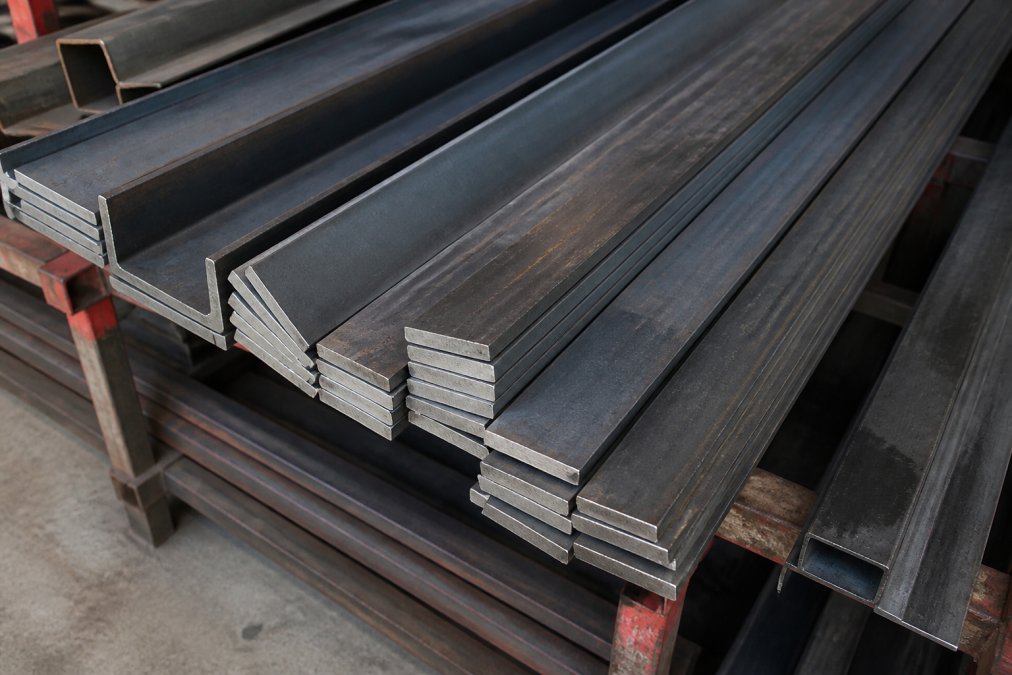
Hot-rolled is the workhorse of fabrication. It is strong, weldable, and affordable. [Angle iron, flat bar, plate, and tubing all commonly arrive hot-rolled. The trade-off is that dark, scaly finish.
Thickness matters too. The longer steel stays hot and the more passes it takes, the thicker the scale grows. Thicker scale chips off in bigger flakes and hides more surface defects.
A quick way to tell what you have: run a fingernail across the surface. Smooth and gray-blue means mill scale. Rough and reddish-brown means rust. Black and oily means the mill applied a protective coating that needs degreasing before anything else.
Do You Actually Need to Remove Mill Scale?
Not always. Mill scale removal depends entirely on what happens to the steel next.
Leave it alone if the steel is going into concrete, getting buried, or serving as a structural member that will never be coated. Scale does no harm there.
Remove it if you plan to weld, paint, powder coat, or apply any protective coating. Those processes fail on top of scale.
Here is the decision in plain terms:
Your Next Step |
Remove Mill Scale? |
Why |
|---|---|---|
Welding |
Yes, at the weld zone |
Scale causes porosity and poor fusion |
Painting |
Yes, full surface |
Paint cannot bond to flaking oxide |
Powder coating |
Yes, full surface |
Outgassing ruins the finish |
Structural, uncoated |
No |
Scale causes no harm |
Concrete embedment |
No |
Coating is irrelevant underground |
Light handling only |
Optional |
Cosmetic choice |
The mistake beginners make is assuming scale is like a primer. It is not. It is a contaminant sitting between your steel and whatever you want to stick to it.
How to Prep Steel for Welding: Remove Mill Scale Before Welding
You should remove mill scale before welding along the joint and roughly one inch back on each side. Scale in the weld zone causes porosity, incomplete fusion, and spatter.
Why does it matter so much? Mill scale melts at a higher temperature than the steel beneath it. While your arc is trying to fuse metal, it is also fighting oxide that will not melt at the same rate. The result is a weld that looks fine on the outside and hides defects inside.
For structural work, that is a real problem. Weld defects mean rework, and rework means time and money.
What to clean:
- The joint faces themselves
- One inch of surface on each side of the joint
- Any area where you will strike an arc
- Tack weld locations
What you can leave:
- The rest of the plate or tube
- Areas far from the heat-affected zone
For most shop work, a quick pass with a grinder and a flap disc gets the joint ready in under a minute per foot. That is the best way to remove mill scale for welding because it is fast, controllable, and leaves a clean surface.
How to Prep Steel for Paint: Why Mill Scale Ruins Coatings
Paint needs a rough, clean surface to grip. Mill scale gives it a smooth, flaking surface instead. That combination guarantees failure.
Think about what happens over time. Moisture works into the cracks in the scale. Rust forms underneath. The scale lifts, and the paint goes with it. You end up with bare steel, exposed rust, and a repaint job that costs more than doing it right the first time.
Powder coating is even less forgiving. The powder cures in an oven, and any trapped moisture or oxide under the coating outgasses during cure. That produces blisters, pinholes, and a finish that fails inspection.
The full prep sequence for paint:
- Remove all mill scale by mechanical or chemical means
- Degrease the surface with a solvent wipe
- Sand or abrade to create a paint anchor profile
- Wipe away dust
- Apply primer within hours, before flash rust starts
That last step is where most people lose the battle. Clean steel starts rusting almost immediately in humid air. We will cover how to stop that in a later section.
Mechanical Methods for Removing Mill Scale
Mechanical removal is the go-to for most shops because it is fast, controllable, and needs no chemicals. The main options are grinding, wire brushing, sanding, and abrasive blasting.
Each method has a sweet spot. Picking the wrong one wastes time or damages the steel.
- Angle grinder with flap disc: Best all-around choice for flat surfaces and weld prep
- Wire wheel or cup brush: Good for corners, edges, and heavy flaking scale
- Sanding discs: Better for finishing than bulk removal
- Abrasive blasting: Fastest for large areas and complex shapes
- Needle gun or scaler: Useful for thick, stubborn scale on heavy sections
The trade-off is speed versus finish. A flap disc removes scale and leaves a smooth surface in one pass. A wire wheel is more aggressive on flaky scale but leaves a rougher texture. Blasting covers the most ground but requires equipment most home shops do not own.
2-3/4" Knot Wire Cup Brush – Carbon →

For small jobs, a grinder and the right abrasive get you 90% of the way there.
Using an Angle Grinder, Flap Disc, and Wire Wheel on Mill Scale
An angle grinder is the most practical tool for mill scale removal in a home shop or small fabrication business. Pair it with the right abrasive and you can strip a plate in minutes.
Start with the disc. A zirconia flap disc cuts faster and lasts longer than other abrasives on carbon steel. The 3M abrasive safety guidance recommends matching disc type to the material and checking the maximum RPM rating before every use.
Work in overlapping passes. Do not press hard. Let the disc do the cutting. Pushing too hard heats the steel, glazes the abrasive, and shortens disc life.
For corners, inside angles, and weld cleanup, switch to a knot wire cup brush. The 4" Knot Wire Wheel fits standard angle grinders and handles mill scale, rust, and weld slag in tight spots. For heavier coverage on flat plate, the Carbon Steel Twisted Wire Cup Brush covers more surface per pass.
Here is a practical setup from our shop:
- 4-1/2" angle grinder, 11 amp or better
- 40-grit zirconia flap disc for bulk scale removal
- 80-grit flap disc for finishing
- Knot wire cup brush for corners and edges
- Safety glasses, face shield, ear plugs, and leather gloves
The whole process for a two-foot section of flat bar takes about three to five minutes. Slower than blasting, but you can do it in a garage with one tool.
Chemical Mill Scale Removal: Acids, Vinegar, and Immersion Baths
Chemical mill scale removal dissolves the oxide layer instead of grinding it away. It works well for complex shapes, small parts, and anyone without a grinder.
The most common options:
- Distilled white vinegar: Slow, safe, cheap. Soak parts for 12 to 24 hours.
- Citric acid solution: Faster than vinegar, still mild. Mix with warm water.
- Muriatic acid: Fast and aggressive. Requires full PPE and careful neutralization.
Vinegar soaking is the beginner-friendly route. Submerge the steel in a plastic tub of distilled white vinegar, cover it, and walk away. Check every few hours. The scale softens and can be scrubbed off with a scouring pad.
Citric acid works on the same principle but faster. Warm water speeds up the reaction. A common approach is a few tablespoons per gallon, though you will need to test ratios for your specific steel.
Muriatic acid is where safety stops being optional. It produces fumes, burns skin on contact, and needs proper neutralization with a baking soda and water mix after the soak. Never use it indoors without ventilation.
Cleaning the Steel After Mill Scale Removal
Cleaning is a separate step from removal, and skipping it undoes your work. Loose dust, acid residue, and oils all block coatings from bonding.
After mechanical removal, wipe the surface with a clean rag and a solvent like acetone or a dedicated prep cleaner. Then abrade lightly with 80 to 120 grit to give the primer something to grip.
After chemical removal, the process is different. Rinse thoroughly with clean water, then neutralize any acid residue. For vinegar or citric acid, a baking soda and water rinse works. For muriatic acid, neutralize, rinse, and dry immediately.
Then dry fast. Compressed air, a heat gun, or clean shop towels all work. Do not let the steel air-dry in a humid shop.
OSHA hazard communication standards require proper labeling and safety data sheets for any chemical you use, including household acids. Keep those sheets on hand.
Preventing Flash Rust on Steel After Cleaning
Flash rust is the orange surface rust that appears on bare steel within hours of cleaning. It happens because clean steel has no protection, and moisture in the air attacks it fast.
Prevention comes down to three things: dry fast, coat fast, and control the environment.
- Dry the steel immediately after rinsing or wiping
- Apply primer or a protective coating within a few hours
- Work in low humidity when possible
- Avoid touching clean steel with bare hands, since skin oils attract moisture
If you cannot coat right away, a light wipe of a rust-preventive product buys you time. Some shops use a phosphoric acid prep that leaves a slightly protective layer while the primer cures.
Post-removal surface passivation is the step most guides skip. Passivation creates a thin, stable oxide layer that slows rust without blocking paint. On carbon steel, a light acid etch followed by a thorough rinse does the job. It is not the same as the passivation used on other alloys, but the principle holds: a controlled oxide layer beats uncontrolled rust.
The window between clean and coated is your enemy. Treat it as a deadline, not a suggestion.
Common Mill Scale Removal Mistakes and the Best Method by Job
Most failures come down to a handful of repeatable mistakes. Fix these and your results improve immediately.
- Grinding too hard: Heat warps thin steel and glazes the disc
- Skipping degreasing: Oil and scale removal do not mix
- Leaving scale in the weld zone: Causes porosity and failed inspections
- Letting clean steel sit: Flash rust starts within hours
- Using the wrong abrasive: Aluminum oxide discs wear out fast on carbon steel
- Skipping neutralization after acid: Residue keeps eating the surface
- Not wearing PPE: Scale chips fly, and acid burns
Now match the method to the job:
Job |
Best Method |
Why |
|---|---|---|
Weld prep on flat bar |
Flap disc on angle grinder |
Fast, clean, controllable |
Corners and inside angles |
Knot wire cup brush |
Reaches where discs cannot |
Small parts, odd shapes |
Vinegar or citric acid soak |
No line-of-sight needed |
Large plate, full strip |
Abrasive blasting |
Fastest coverage |
Thin sheet |
Light sanding or chemical |
Avoids heat warping |
Pre-paint finish |
80 to 120 grit flap disc |
Leaves paint-ready profile |
The throughline here is simple: match the method to the geometry and the next step. There is no single best way to remove mill scale, only the right way for the job in front of you.
Frequently Asked Questions
What is the fastest way to remove mill scale from steel?
For most shop work, an angle grinder with a 40 or 60 grit zirconia flap disc removes mill scale fastest on flat surfaces. A twisted knot wire wheel or cup brush works better on edges, inside corners, and weld areas where a disc cannot reach. For small parts, an acid bath or a long vinegar soak removes scale with no grinding at all, though it takes hours or days rather than minutes.
Is it necessary to remove mill scale before welding?
Yes, at least along the joint. Mill scale melts at a higher temperature than the base steel, so it can cause lack of fusion, porosity, and inconsistent arc behavior. Grinding or wire brushing a strip roughly 1 inch wide on each side of the joint gives clean metal for the arc. TIG welding demands fully clean steel, while MIG and stick tolerate slightly more scale but still weld better without it.
Does mill scale prevent paint from sticking to steel?
It does. Mill scale is a flaky iron oxide layer that does not bond to the steel beneath it, so paint applied over scale eventually peels as the scale lifts. For any coated or powder-coated part, remove mill scale by abrasive blasting, grinding, or chemical stripping, then apply a primer within hours. Coating over tight, intact scale may look fine at first but fails within a season or two outdoors.
How do I prevent flash rust after cleaning steel?
Flash rust appears within hours on bare, cleaned steel in humid air. Dry the surface immediately after cleaning, then apply a primer, oil, or other protective coating the same day. Keep parts indoors or cover them, and avoid handling clean steel with bare hands. A phosphoric acid wipe or a passivating product also slows rust while you finish fabrication. Clean steel never stays clean for long without protection.