

Last Updated: September 28, 2026
Welding Safety Gear for Home Shops: What You Actually Need First
Most home welders buy welding accessories backwards: a grinder and clamps first, then they weld in a t-shirt and safety glasses. That order costs them.
The right approach to essential welding accessories for home shop setups starts with protection, because arc flash and spatter injuries happen in seconds and heal in weeks. At JWM Metal Supply, we ship welding gear daily, and the pattern never changes: the people who buy safety gear first keep welding. Below, we break down what to buy, what to skip, and where your money earns its keep.
Helmets, Sleeves and Aprons That Fit Garage Work
An auto-darkening helmet is the one piece of safety gear you should not compromise on. It switches from light to dark in a fraction of a second, so you can position your torch and see the joint before you strike an arc. Fixed-shade helmets force you to nod the shield down blind, which is how beginners lose bead consistency.
The VEVOR Auto-Darkening Welding Helmet covers MIG, TIG, Stick, plasma cutting, and grinding with a variable shade range of DIN 4 / 5-9 / 9-13 and four arc sensors. It runs on solar power with a battery backup, includes a grinding mode, and meets ANSI and CE standards.

For arms, cowhide leather sleeves stop sparks and spatter from reaching your forearms during overhead work and grinding. A leather apron adds chest-to-knee coverage and pockets for soapstone, pliers, and a tape measure.
Metal Preparation Tools for Welding: Cutting, Grinding and Deburring
Keep a wire brush dedicated to each metal type. Brushing carbon steel with a brush used on another material drags contamination into your next weld.
Welding Clamps for DIY Projects: Magnets, Vises and Ground Clamps
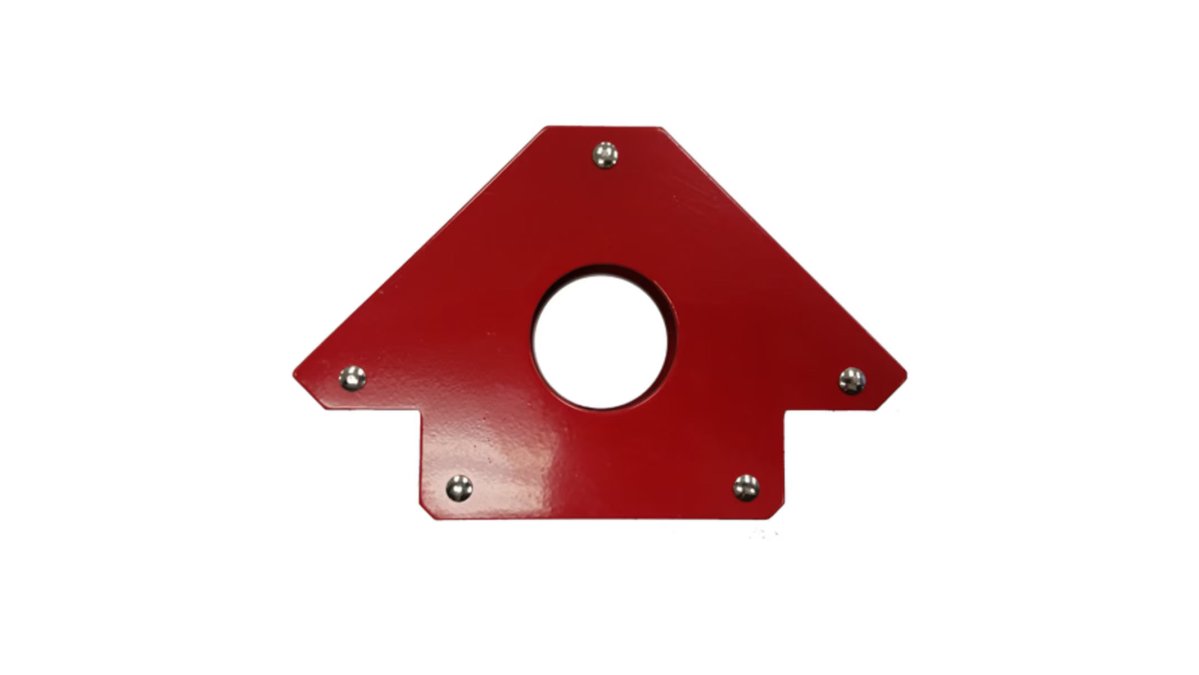
Clamping is where solo welding lives or dies. With no second pair of hands, you need tooling that holds the workpiece square while you tack.
Clamping and Workholding Solutions That Hold Square
For anything that needs real force, move up from magnets to mechanical holding.

Accessory |
Job It Does |
Typical Price |
|---|---|---|
Welding magnet |
Holds angles at 45°, 90°, 135° |
$10.38 |
Ground clamp |
Delivers stable amperage to workpiece |
$21.99 |
Bench vise |
Holds material for cutting and grinding |
$99.99 |
Pipe vise |
Clamps round stock without deforming |
$58.99 |
Workbenches, Tables and Pipe Stands for Small Shops
Support tooling separates a shop that works from one that fights you. In a home garage, the real problem isn't which table to buy, it's fitting a welding station into a space that also holds a car and a lawnmower.
Sizing a Welding Table to Your Actual Footprint
A welding table earns its floor space when it's sized to the work you do, not the work you imagine doing. Home fabricators commonly run a tabletop in the 24" x 36" to 30" x 48" range, big enough to lay out a gate frame or trailer tongue, small enough to roll against a wall. Height matters as much as size: standard bench height runs about 34" to 36", and the wrong height forces you to hunch, which wrecks bead consistency faster than bad technique.
Pipe Stands: The Support Tool Nobody Buys Enough Of
For pipe, tubing, and round stock, a pipe stand supports long material at working height so it doesn't sag or shift mid-cut. The 1,500 lb Adjustable Welding Pipe Stand carries up to 1,500 lb, adjusts from roughly 28" to 52", and uses a 4-ball transfer V-head that lets pipe roll for positioning. Folding legs keep it storable. The thing nobody tells you is that two is the real minimum: one stand supports a length, two let you rotate and index it. Buy the second one before you need it.
The Space-Saving Layout Most Guides Ignore
- Pick a wall, not a corner. Corners trap long stock. A wall lets you feed 10-foot lengths through the station and out the door.
- Zone the bench. Reserve the left third for cutting and grinding, the middle for welding, the right third for layout and measuring. Tools stay where the task happens instead of migrating across the shop.
- Go vertical for storage. Pegboard, magnetic strips, and wall racks for clamps free up every square foot of floor.
- Keep a 3-foot clear arc around the table. You need room to step back from spatter and to swing a grinder without hitting the car.
- Put the table on casters. A rolling table turns a one-bay garage into a two-station shop, weld, then roll the table against the wall and pull the car in.
A solid workbench gives you a flat, heat-tolerant surface for layout and assembly, and a pipe stand keeps long stock from sagging. But the layout tying them together decides whether you weld on a Tuesday night or spend it moving things out of the way.
Consumables, Spare Parts and How to Store Them
Consumables are the accessories you rebuy, so how you store them decides how often you rebuy them.
VEVOR Auto-Darkening Welding Helmet →
The core list for a home shop:
- Contact tips for MIG guns
- Nozzle gel to stop spatter sticking to the nozzle
- Tungsten electrodes for TIG
- Chipping hammer for slag removal
- MIG pliers for tip changes and wire trimming
- Wire brushes for between-pass cleaning
Welding Shop Organization Tips for Tight Garage Layouts
A garage shop has one real constraint: floor space you also need for a car. Organization isn't about tidiness, it's about cutting the seconds you lose hunting for a clamp or tripping over a lead, because those seconds add up to a project that never gets finished.
Vertical and Mobile Beats Big and Fixed
The fix is vertical and mobile. Mount grinders and vises on a bench you can move. Put pegboard or a magnetic strip on the wall for pliers, hammers, and brushes. Store clamps on a wall rack instead of a drawer, where they tangle and disappear.
Welding shop organization tips that actually hold up:
- Group tools by task, not by type. Grinding tools together, clamping tools together.
- Keep a scrap bin within arm's reach of the bench. Offcuts become gussets and shims.
- Run your welding leads and ground cable on a wall hook so they don't coil on the floor.
- Store gas cylinders upright and chained to a wall, away from the door swing.
- Leave a clear path from the bench to the door. Fire safety starts with an exit you can actually use.
Ventilation and Air Quality: The Part Most Guides Bury
Organization and air quality are the same problem from two angles: controlling what moves through your shop, tools, stock, and air. Get the flow right and the shop stops fighting you.
Budget vs. Professional Tiering: Where to Spend and Where to Save
Spend on anything between you and the arc. Save on anything that just holds metal.
Spend here:
- Auto-darkening helmet. Your eyes are not a place to save $40.
- Respirator and ventilation. Fume exposure compounds over years.
- Ground clamp. A bad ground ruins every weld you make.
- Bench vise. A vise that shifts under load is worse than no vise.
Save here:

- Magnets and clamps. Cheap ones hold fine. Buy several.
- Chipping hammers and brushes. Simple steel tools, low failure risk.
- Pipe stands. A mid-tier stand with a 1,500 lb rating handles home work comfortably.
Conclusion
The hard part of a home shop isn't buying accessories. It's buying them in the right order, so your first weld is safe and your tenth is square.
Frequently Asked Questions
What safety equipment is required for a home welding shop?
At minimum, an auto-darkening helmet, flame-resistant sleeves or a leather apron, and heat-resistant gloves. The VEVOR Auto-Darkening Welding Helmet ($69.99) covers MIG, TIG, Stick and plasma cutting with a 3.94" x 3.15" true color lens and four arc sensors. Cowhide Leather Welding Sleeves ($24.99) and the Premium Cowhide Leather Welding Apron ($44.99) protect arms and torso from spatter and grinding debris.
What tools are needed to prepare metal for welding?
You need a way to cut, a way to grind, and a way to clean. An angle grinder with a wire brush handles rust and mill scale, while a chipping hammer clears slag between passes. The Hatchet Style Welding Chipping Hammer ($21.14) combines a chisel edge and pointed pick for tough cleanup, and MIG Welding Pliers ($24.90) handle nozzle maintenance and spatter removal so your gun keeps feeding wire smoothly.
How do I organize my welding workspace for efficiency?
Keep the tools you reach for most within arm's length of the bench. The Premium Cowhide Leather Welding Apron has six front tool pockets for pliers, soapstone and tips, so they travel with you instead of piling on the table. Group cutting, grinding and welding zones separately, and store consumables like contact tips in sealed containers away from grinding dust.
What are the most important welding accessories for MIG projects?
A solid ground connection matters most. The Heavy-Duty Steel Welding Ground Clamp ($21.99) is rated to 300 amps and its spring-loaded grip keeps contact steady on the workpiece, which helps arc stability. Pair it with a Multi-Purpose Welding Magnet ($10.38) for holding 45, 90 and 135 degree angles during tack welding, plus MIG Welding Pliers ($24.90) for tip changes and liner checks.