

Last Updated: October 14, 2026
Start With a Full Trailer Frame Inspection
A heavy duty trailer frame reinforcement job starts with a full inspection, not a welder. Skip this step and you risk welding good steel to metal that's already failing.
That's the pattern most guides miss. A crack is a symptom. The real problem is usually flex, fatigue, or a bent rail upstream.
So before you buy a single stick of steel, spend an hour underneath the trailer.
Tools and Materials You'll Need
Gather these before you crawl under the frame:
- Bright flashlight and an inspection mirror
- Wire brush and rags
- Tape measure and a straightedge
- Chalk or paint marker
- Angle grinder with a grinding wheel
- Welder (MIG, stick, or TIG)
- Safety glasses, gloves, and a respirator
- Replacement steel tubing, plate, or gussets
For the steel itself, match your material to the job. Our 2" x 4" x 3/16" rectangle steel tubing is a common pick for crossmembers and reinforcement rails. For flat patches and plates, 1/4" Thick × 5" Wide A36 Steel Flat Plate - Select Length (5"-30") cuts clean and welds easily.


Spotting Cracks, Bends, and Weakened Metal
Look for these signs of trouble:
- Hairline cracks near welds, hangers, and crossmember joints
- Rust streaks running out from a joint (a hidden crack lets moisture in)
- Bends or kinks in the main rails, especially behind the axles
- Dents and crushed tubing from impacts or overload
- Cracked or missing welds at factory joints
- Sagging sections between crossmembers
Check the frame with the trailer unloaded and on level ground. A frame that looks fine loaded can hide a bend that only shows up under weight.
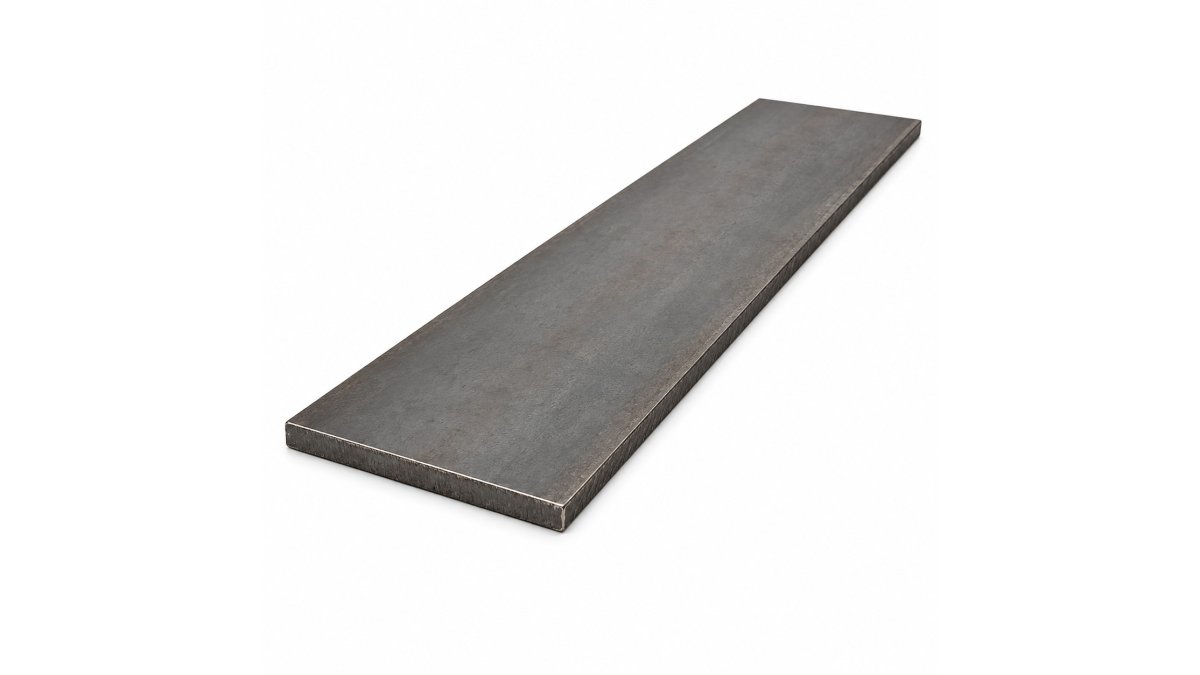
1/4" Thick × 5" Wide A36 Steel Flat Plate – Select Length (5"–30")
Trailer Frame Crack Repair: Cut, Weld, and Reinforce
Trailer frame crack repair follows one rule: stop the crack, then spread the load. A crack is a stress concentrator. If you just weld over it, the stress stays in the same spot and the weld fails.
Here's the process:
- Find both ends of the crack. Use a dye penetrant or grind lightly to trace it.
- Drill a small hole at each crack tip. This stops the crack from spreading.
- Cut out the damaged section. Remove weakened metal back to solid steel.
- Bevel the edges so you get full penetration on the weld.
- Weld the joint, then grind it smooth.
- Add a reinforcing plate over the repair for extra strength.
The reinforcing plate matters. It carries load around the repair instead of through it. A 1/4" Thick × 5" Wide A36 Steel Flat Plate - Select Length (5"-30") works well for this. Cut it longer than the repair and weld it along both sides.
Straightening a Bent Frame and Restoring Geometry
Frame straightening restores the original shape so the trailer tracks and wears tires evenly.
For a mild bend, you can pull it back with a hydraulic jack and chains anchored to a solid point.
Measure diagonally, corner to corner, to check for square. Both measurements should match. If they don't, the frame is out of geometry.
Once it's straight, reinforce the area that bent. Bends don't happen by accident. Something overloaded that section, and it will again.
Trailer Frame Gusset Placement at High-Stress Joints
Trailer frame gusset placement decides whether a joint holds or cracks. A gusset is a triangular plate that spreads stress across a joint instead of letting it concentrate at one point.
Put gussets at:
- The junction of the main rails and the tongue
- Where crossmembers meet the main rails
- Any 90-degree corner in the frame
- Around hanger brackets and spring mounts
Our 1/4" A36 Steel Triangle Gusset Plate - Select Size are cut from low carbon steel with clean, weld-ready edges.

1/4" A36 Steel Triangle Gusset Plate – Select Size
Weld the gusset along both legs, not just the corner. A gusset welded on one side only does half the job.
Trailer Frame Crossmember Spacing and Torque Tubes
Trailer frame crossmember spacing controls how much the frame flexes, and the right spacing depends on your frame type, not a single universal number. Most guides hand you a range and stop there. The frame profile matters more than the number.
Spacing by Frame Type
- C-channel frames. The open profile flexes more under torsion, so crossmembers on 16" to 20" centers are common for heavy-haul use. C-channel is easy to weld and drill, but it twists more than a closed profile.
- I-beam frames. The tall web resists bending well, so you can often run 24" to 36" centers and still control flex. The trade-off is that I-beam webs are thinner than they look and are easy to over-weld, which creates stress risers.
- Rectangular tube frames. The closed profile is the stiffest per pound, so 24" to 30" centers are typical. The catch is that a closed tube traps moisture if you weld it shut without drainage, so leave a weep path or drill a small drain hole at the low point.
A common pattern is to tighten spacing near the axles and hangers, where load concentrates, and open it up toward the rear, where stress is lower. That puts steel where it works instead of spreading it evenly.
2" x 3" x 1/4" (0.250") Rectangle Steel Tubing — Select Length →
What a Torque Tube Actually Does
For long frames, a torque tube runs across the frame and ties the two rails together. It resists twisting, which is the enemy of a heavy-haul trailer.
A torque tube works by converting the twisting motion of one rail into a load the opposite rail resists. That is why it must tie into both rails with full-penetration welds and gussets at each end. A torque tube welded on one side only does nothing.
The Trade-Offs Nobody Mentions
More crossmembers mean a stiffer frame, but also more weight, more welds, and more places for corrosion to start. Every added crossmember is a new joint that can crack if it is welded too rigidly. A frame that is too stiff can transfer shock loads straight to the axles and hangers instead of absorbing them, which shifts the failure point rather than removing it.
Properly installed gussets and torque tubes effectively distribute stress across these structural members, yet even the most robust reinforcement cannot compensate for existing metal fatigue or hidden cracks that often require a systematic approach to detecting frame damage.
Trailer Axle Load Distribution and Load Path Checks
Trailer axle load distribution is about where the weight sits and how it travels through the frame. Get it wrong and you overload one section while another does nothing. Most guides stop at "balance your load." The real work is understanding how the ratings interact.
The Lowest-Rated Component Wins
Every trailer has a chain of rated components: the axles, the tires, the springs, the coupler, the hitch, the ball mount, and the frame itself. The safe capacity of the whole trailer is the lowest rating in that chain, not the highest.
This is the mistake reinforcement work invites. Adding steel makes the frame feel stronger, so owners load heavier, and the next weakest link fails.
How the Load Travels
Follow the weight from the deck, through the crossmembers, into the main rails, and down to the axles. Every joint on that path needs to be strong enough for the load it carries.
- Deck to crossmembers. The deck spreads point loads across the crossmembers. Thin or widely spaced crossmembers let the deck flex and fatigue.
- Crossmembers to main rails. This is where most cracks start, because the joint concentrates stress. Gussets here spread the load into the rail.
- Main rails to hangers and axles. The hanger brackets carry the full load of the trailer plus cargo. Cracks around hangers usually mean the load path is overloaded, not that the weld was bad.
A strong rail with a weak crossmember just moves the failure point. Reinforcement only helps if the entire load path is complete.
Tongue Weight and Axle Position
Tongue weight is the downward force the trailer puts on the hitch. Too little and the trailer sways at speed. Too much and you overload the rear of the tow vehicle and the coupler.
Axle position sets how the load balances between tongue and axles. Move the axles forward and tongue weight climbs. Move them back and the trailer sways.
Weight Distribution Side to Side
Keep the load centered and balanced side to side. An off-center load twists the frame and overloads one rail, one spring, and one tire. That twist is what cracks crossmember joints and wears tires unevenly. If you haul uneven loads regularly, add crossmembers or a torque tube on the loaded side to resist the twist.
Federal size and weight limits for commercial vehicles
When to Stop and Call a Qualified Professional
Some jobs are beyond a home garage. Call a qualified professional when:
- The main rails are bent or twisted beyond a simple pull
- The frame has cracks in multiple locations
- You're unsure whether the frame can safely carry its rated load
- The trailer hauls commercial or heavy-haul loads
- You don't have the welding skill for full-penetration joints
A structural repair done wrong fails at speed, on the highway, with a load behind it. That's not a risk worth taking to save a few hours.
For the steel you need, JWM Metal Supply cuts American-made carbon steel to your exact length with no minimum order. Standard orders ship in 1-5 business days, and material certifications are available for load-bearing work.
Frequently Asked Questions
Is it legal to weld a frame?
Welding a trailer frame is legal for personal repairs and most commercial work, but any weld on a load-bearing member should be done by someone competent with the process. Use proper joint prep, correct filler, and full penetration where the load path demands it. If the trailer is titled or used commercially, check your state's requirements and any applicable federal standards, since a weakened weld can shift liability onto the owner if a failure causes an accident.
How can you reinforce a trailer frame safely?
Start with a full inspection for cracks, bends, and rust, then repair damage before adding anything. Weld reinforcement plates or gussets at high-stress joints, add crossmembers or a torque tube to reduce flex, and keep the added steel matched to the existing wall thickness. After welding, check frame alignment and recheck axle load distribution so the trailer still tracks straight and carries its rated payload.
Where should crossmembers be placed on a trailer frame?
Set crossmembers on consistent on-center spacing, typically 16 to 24 inches for a heavy duty trailer, with extra members under the deck joints, axle hangers, and any point where you tie down cargo. Keep spacing even so the frame flexes uniformly instead of concentrating stress at one bay. If the trailer uses a wood floor, align crossmembers with the plank seams so the deck fastens to solid steel.
When should a damaged trailer frame be replaced instead of repaired?
Replace the frame when damage is widespread rather than isolated. Multiple cracks along the same rail, a bend that won't straighten without cracking, heavy section loss from rust, or a frame that no longer holds alignment after straightening all point to replacement. A single crack or small bend at a known stress point can usually be repaired and reinforced, but once the frame has lost its geometry, patching it only postpones the next failure.
Reinforcing a trailer frame is a job where the details decide the outcome. The right steel, cut to the right size, makes every weld and gusset stronger. JWM Metal Supply offers American-made carbon steel tubing, plate, and gussets cut to your specs, with fast shipping and no minimum order. Shop now and get the material your trailer frame needs.