

Last Updated: October 20, 2026
What Is Structural Carbon Steel?
Structural carbon steel is steel intended for applications where strength, stiffness, weldability, and predictable mechanical properties are important.
Common applications include structural frames, equipment supports, brackets, base plates, machinery mounts, trailers, agricultural equipment, and fabricated assemblies. Most structural projects combine several steel shapes: square tubing for frames, flat plate for mounting surfaces, angle iron for reinforcement, and gusset plates for connections.
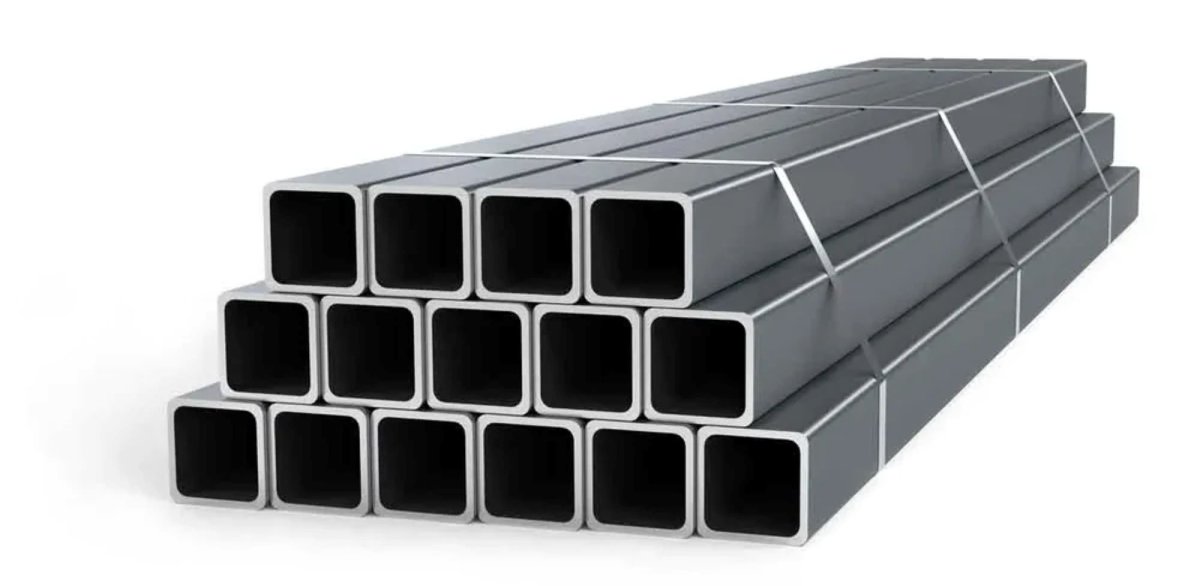
Because these products serve different purposes, they're manufactured to different material specifications. Understanding them helps you avoid costly mistakes.
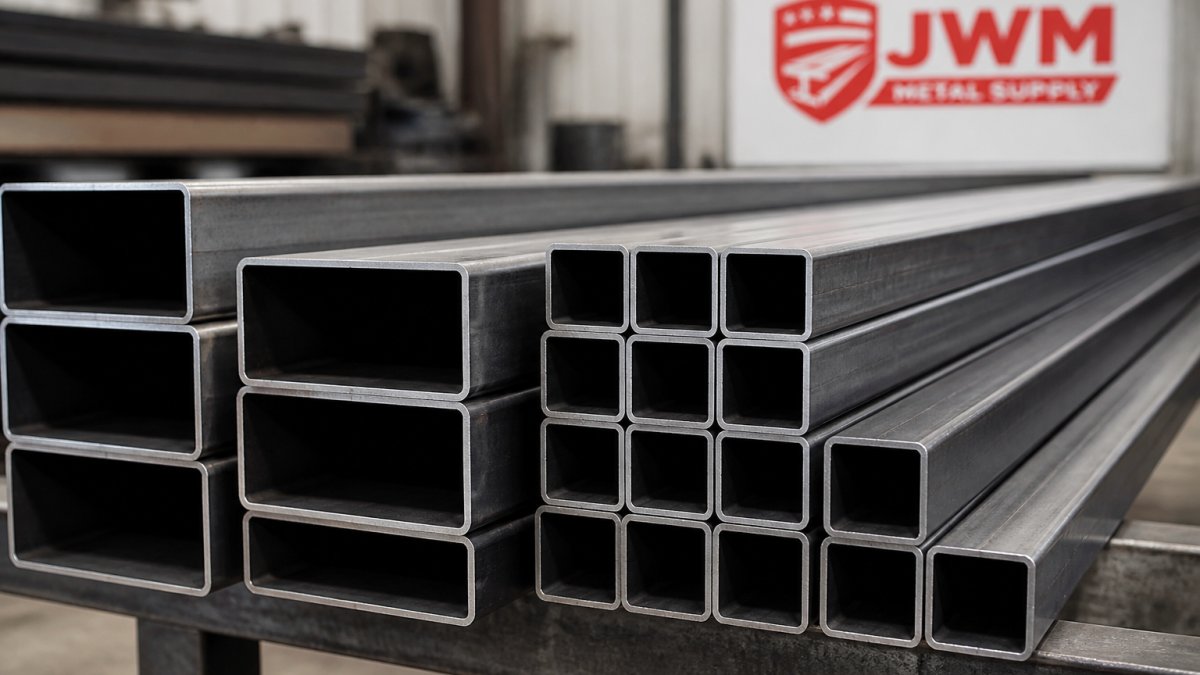
A36 vs A500 Steel: Plate and Shapes vs Structural Tubing
The difference between ASTM A36 and ASTM A500 comes down to intended use and product form. A36 is the standard for structural shapes and plate.
A36 serves general fabrication and construction with solid shapes: beams, channels, angles, flat plate, and solid bar stock. It offers excellent weldability and wide availability.
A500 is engineered for hollow structural sections. The tubing form provides strength through geometry, creating a high strength-to-weight ratio without higher carbon content, making A500 ideal for frames needing rigidity with minimal material.
A key practical difference: A36 plate and shapes are easier to drill, cut, and machine with standard shop equipment.
Specification |
Product Form |
Best For |
Weldability |
Common Sizes |
|---|---|---|---|---|
ASTM A36 |
Plate, shapes, solid bar |
Structural frames, supports, brackets |
Excellent |
1/4" plate, 1" bar, standard angles |
ASTM A500 |
Hollow tubing |
Frames, columns, light structural work |
Good |
2x2", 4x4", 2x4" rectangular |
ASTM A572 Structural Steel: Higher Strength When A36 Is Not Enough
ASTM A572 is a high-strength, low-alloy structural steel that delivers greater yield strength than A36. When your project faces heavier loads or requires less material to meet specifications, A572 becomes the practical choice.
A572 comes in multiple grades, Grade 42, Grade 50, and Grade 65, with increasing strength.
The trade-off is weldability. A572 requires more careful technique than A36: higher carbon content means controlling heat input and cooling rate more precisely. It's manageable with proper procedures, but demanding for shops accustomed to A36's forgiving nature.
Structural Steel Grades Chart: Yield, Tensile and Carbon Content
Understanding mechanical properties helps you evaluate whether a carbon steel grade fits your application. Yield strength is how much stress the material handles before permanent deformation; tensile strength is the maximum stress before failure.
Grade |
Yield Strength |
Tensile Strength |
Carbon Content |
Typical Use |
|---|---|---|---|---|
A36 |
36 ksi |
58-80 ksi |
0.25% max |
General fabrication, plate, shapes |
A500 Grade B |
46 ksi |
60 ksi |
0.35% max |
Structural tubing, frames |
A572 Grade 50 |
50 ksi |
65 ksi |
0.30% max |
Heavy-load structures, bridges |
Higher carbon content improves strength but reduces weldability and increases hardness, which can cause brittleness in cold environments or after welding. That's why A36, with lower carbon content, remains the industry standard for general fabrication, it strikes the best balance for most projects.
Steel Grade Selection for Fabrication: A Project Decision Matrix
Grade selection is a sequence of eliminations: product form, strength demand, fabrication capability, service environment, then documentation and procurement constraints. Working through those filters in order prevents picking a grade that meets the load but cannot be welded, sourced, or certified.
Step 1: Filter by product form first
Product form often decides the grade before strength is considered.
- Plate, angle, channel, beam, and solid bar: ASTM A36 is the default general-fabrication specification. It is widely stocked and easy to source in standard sizes.
- Hollow structural sections (square, rectangular, round tubing): ASTM A500 is the relevant specification. Tubing strength comes largely from geometry, so the hollow shape delivers stiffness at lower weight than a solid section of the same envelope.
- Higher-strength shapes and plate: ASTM A572 Grade 50 is the common upgrade when A36 section sizes become impractical.
Mixing forms, an A500 tube frame with A36 mounting plates, for example, is normal. Each component is specified to the standard governing its form, and the assembly drawing should list each specification separately.
Step 2: Match strength demand to section size
Yield strength determines how much stress a section carries before permanent deformation. The practical question: does A36 at a workable thickness meet the design load, or does the section become too heavy or too deep?
Grade |
Minimum Yield Strength |
Minimum Tensile Strength |
Typical Role |
|---|---|---|---|
ASTM A36 |
36 ksi |
58 ksi |
General fabrication, plate, shapes, bar |
ASTM A500 Grade B |
46 ksi |
58 ksi |
Structural tubing, frames, columns |
ASTM A500 Grade C |
50 ksi |
62 ksi |
Higher-demand tubing applications |
ASTM A572 Grade 50 |
50 ksi |
65 ksi |
Heavier loads where A36 sections grow too large |
ASTM A572 Grade 65 |
65 ksi |
80 ksi |
High-strength demand with controlled welding |
A useful rule of thumb: if an A36 member at an available thickness passes the design check with margin, there is rarely a reason to upgrade. Move to A572 Grade 50 when the A36 section would need to be thicker or deeper than the design allows, or when weight reduction is a real constraint.
Step 3: Check fabrication capability against the grade
Strength and weldability trade off in carbon steel: higher-strength grades carry more alloy content and demand tighter welding control.
15" x 27" Steel Rectangle Plate -- 1/4" Thick-A36 Hot Rolled →
- A36: The most forgiving. Welds readily with common processes, tolerates minor procedure variation, and machines and drills with standard shop tooling.
- A500: Weldable with normal structural procedures, but the hollow section concentrates heat at corners and joints, so fit-up and joint access matter.
- A572 Grade 50: Requires controlled heat input, and preheat is commonly specified for thicker sections or colder shop conditions.
- A572 Grade 65: Demands a written welding procedure and qualified welders; not a drop-in substitute for A36.
If a shop cannot support the procedure control a higher grade requires, the answer is usually a larger A36 section rather than an under-controlled A572 weld.
Step 4: Screen for service environment
- Indoor, dry, protected: A36 is usually sufficient; corrosion is not a governing factor.
- Outdoor or humid: Any of these grades will corrode without protection. The grade choice does not remove the need for coating, galvanizing, or a maintenance plan.
- Cold service: Impact toughness becomes a governing property.
- Cyclic or impact loading: Fatigue and fracture considerations push toward documented toughness and conservative detailing rather than simply higher strength.
Step 5: Confirm documentation and approval path
Before locking the grade, confirm three things:
- The governing specification named on the drawing (A36, A500 with grade letter, A572 with grade number).
- Whether mill test reports are required for code compliance or engineer sign-off.
- Whether a qualified structural engineer has approved the grade against the applicable building code and design calculations. Grade selection is a design decision, not a purchasing decision.
Run the filters in order: product form, strength demand, fabrication capability, service environment, documentation. The grade that survives all five is the right grade, and it is often A36 for general fabrication and A500 for tubing frames.
Weldability, Toughness and Fabrication Trade-offs
Weldability and toughness are inversely related to strength in carbon steel. Higher-strength grades require more careful procedures and offer less forgiveness for technique variation. A36 is the most forgiving: it welds easily with standard MIG, TIG, or stick processes and needs minimal preheat or post-weld heat treatment.
A572 Grade 50 demands stricter control: manage heat input carefully to avoid a hard, brittle zone near the weld. Preheat (typically 50-100°F) is often required, and post-weld stress relief may be necessary for thick sections or critical joints.
Fabrication reality: Most shops choose A36 not because it's strongest, but because it's most forgiving. Upgrade to A572 only when load calculations require it.
Standards, Certifications and What to Check Before Ordering
Every structural carbon steel grade is defined by a written specification fixing chemical composition, mechanical properties, tolerances, and test methods. Ordering to the specification, not a casual description, is what makes the material usable on a code-governed project.
Read the specification, not the nickname
"A36" and "A500" are shorthand for ASTM standards. When you order, confirm the full designation on the purchase order and the mill certificate:
- ASTM A36 covers structural shapes, plate, and bar.
- ASTM A500 covers cold-formed welded and seamless carbon steel structural tubing, and it carries letter grades (A, B, C) with different strength levels. "A500" alone is incomplete; the grade letter changes the yield strength.
- ASTM A572 covers high-strength low-alloy shapes, plate, and bar, and it carries numeric grades (42, 50, 55, 60, 65) with different strength and chemistry limits.
Grade equivalency is not interchangeability
A common procurement shortcut is treating foreign or alternate designations as direct swaps. They are not. ASTM grades, European designations, and other national standards were written by different bodies with different chemistry limits, test methods, and tolerances. Two grades with similar yield strength can still differ in carbon content, toughness, or dimensional tolerance.
Shops often accept an "equivalent" grade as a substitute, then discover the welding procedure or design check was written around the original specification. Treat any substitution as a design change requiring engineer review and documented approval before the material is cut.
What to verify before the order ships
- Specification and grade: Full ASTM designation including grade letter or number.
- Product form and dimensions: Plate, shape, bar, or tubing, with nominal size and thickness.
- Mill test reports: Confirm whether the project requires them. Code-governed and engineer-approved work commonly does.
- Heat and lot traceability: For multi-piece orders, confirm the certificates match the heats actually shipped.
- Condition and finish: Hot-rolled material arrives with mill scale, a normal oxide layer that does not affect structural integrity but can hold moisture and show light surface rust in humid storage. Plan cleaning or coating if appearance or exposure matters.
- Tolerance check: Verify thickness and dimensional tolerances against the specification, especially on plate and tubing where mill tolerances can affect fit-up.
Procurement risk beyond the purchase order
A practical habit: confirm availability in the exact size and grade before finalizing the design. Designing around routinely stocked grades and sizes reduces lead time and substitution pressure later.
Do not accept a substitute grade on a load-bearing member without documented engineer approval. Similar yield strength does not guarantee similar weldability, toughness, or dimensional tolerance.
Frequently Asked Questions
Which grade of carbon steel is best for structural projects?
There is no single best carbon steel grade. ASTM A36 suits most general plate, bar and shape work because it welds easily and is widely available. ASTM A572 Grade 50 makes sense when you need higher yield strength or want to cut weight. ASTM A500 covers structural tubing. Match the grade to the product shape, the loads, the welding process and any engineer-specified standard, then confirm the mill test report before you cut.
What is the difference between ASTM A36 and ASTM A500?
ASTM A36 covers hot rolled carbon steel plate, bar and structural shapes, with a 36,000 psi minimum yield strength. ASTM A500 covers cold-formed structural tubing in round, square and rectangular shapes. A500 tubing is produced specifically for hollow structural sections, so its shape tolerances and forming history differ from A36 plate. Use A36 for plates and brackets, and A500 when the design calls for tube.
Is ASTM A572 stronger than ASTM A36?
Yes. ASTM A572 Grade 50 has a 50,000 psi minimum yield strength against 36,000 psi for A36, and higher tensile strength as well. That extra capacity lets you use a lighter section or carry more load in the same space. The trade-off is that A572 costs more and is less universally stocked, so it pays off on projects where weight or section depth is constrained.
Does the steel product shape affect which grade I should choose?
It does. Plate, bar and shapes are commonly specified to A36 or A572, while hollow structural sections are usually specified to A500. Round bar for pins and spacers is often A36 hot rolled. Check the product listing and the mill certificate, because the same project can legitimately combine three different specifications across its plate, tube and bar components.
What should I check before ordering structural steel?
Confirm the grade designation, the product shape and dimensions, the cut tolerance and whether a material certification is included. Ask whether the mill test report traces to the heat number. For load-bearing work, have a licensed engineer approve the grade and connection design. Also confirm lead time against your deadline and whether custom cuts carry extra charges, so the quote you approve matches the invoice.